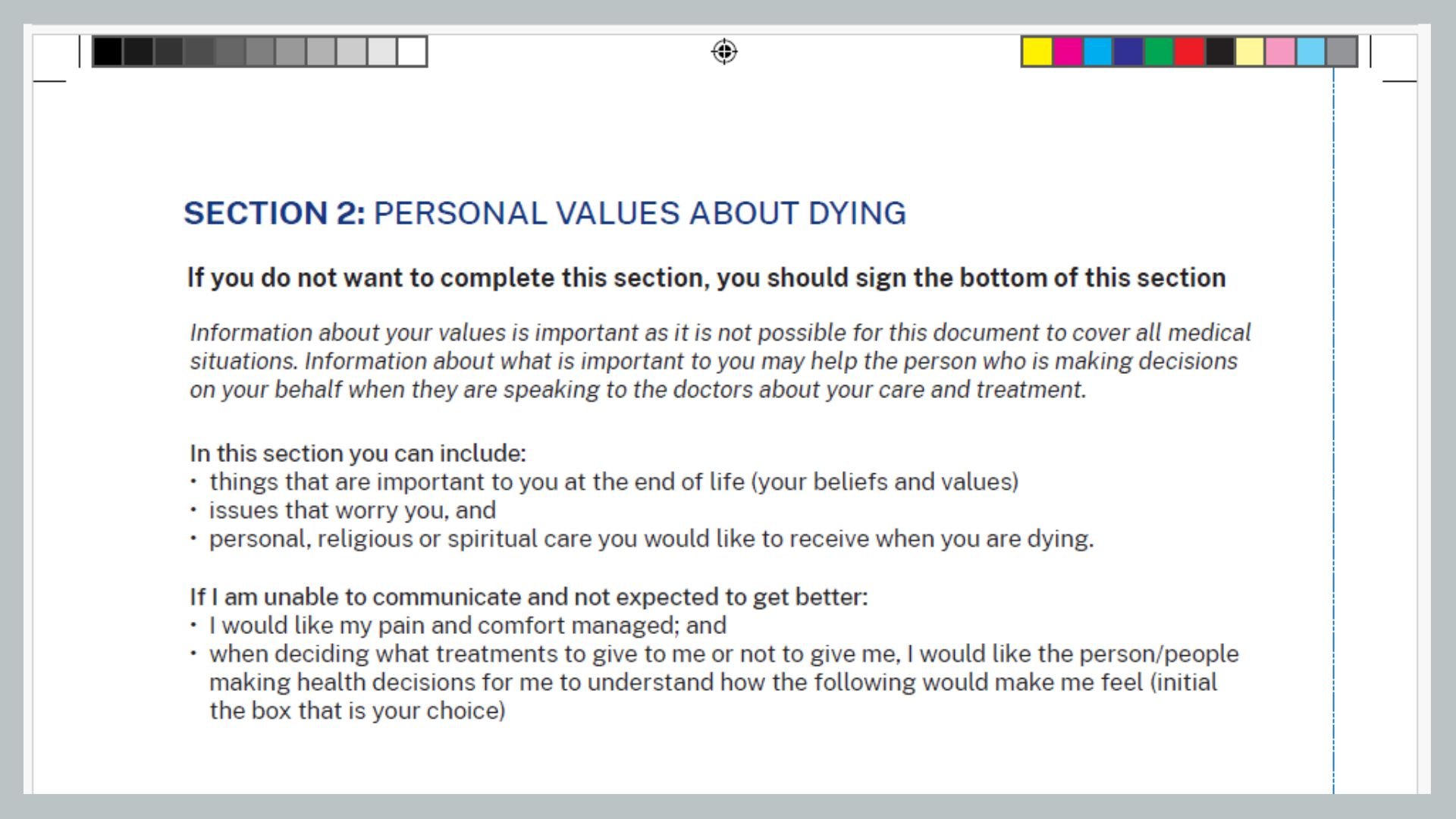
The way that we talk to people about death and incapacity matters. While we cannot tip toe around the topic, we also don’t need to dive in the deep end. Page 2 of the Advance Care Directive, if you are using the form set by the government, opens with the heading “Personal Values about Dying”. Page 1 just asks for everyone’s full names and addresses. Do we need to dive straight into death?
Not only does this feel unnecessary, but it is misleading. The first question on this page that the client has to answer is -
If I can no longer recognise my family and loved ones, I would find life …..
Bearable / Unbearable / Unsure
Now yes, the question is asked in the context of whether to withhold treatment, but as solicitors we know that the person who no longer recognises anyone is a long way from death (if this is their only problem). Why does the title talk about dying? The question itself is fine, the title at the top of the page is an issue. The next question asks about control of bladder and bowels, again, something that is a long way from death.
You can have a look at the standard form of Advance Care Plan for yourself for free, here.
can we use better language?
As lawyers can we ask the same questions, but with more helpful language? I would say in almost every case yes, partly cause this is what we do, and partly because we know our clients and spend a significant amount of our personal energy working through ways to communicate more effectively with those clients.
What if we started with a heading like “Personal Values about Ongoing Treatment”? What if we broke some of this information up, so the initial questions could remain but be interspersed with questions about the clients’ preferences between aged care or care coming into their home. The later questions on this page about no longer being able to eat or drink independently probably belong with decisions on dying or under a heading about dying, but an inability to dress yourself probably doesn’t belong under a heading about dying.
In our free Webinar we looked at this document, and all participants received a PowerPoint version of the current precedent that NSW Health provides so that they could make some changes. If you make a lot of changes the GP is probably going to baulk, but even something as simple as changing the order of the pages (cause you can do that in PowerPoint) to have a more gentle introduction might help. You can finish with DNRs which might help your clients without scaring the GP.
The event
On Tuesday 26 May 2026 we had a Webinar where we discussed Advance Care Directives, whether you are using them enough, and whether they can help a client to properly engage with their Power of Attorney document and their Letter of Wishes. We also looked at all of the potential decision makers in NSW, including a new option thanks to the Aged Care Act 2024.
While this event is free, in order to get the recording and the documents you will need to complete the Survey that you get in your inbox. The Survey questions are relevant to the event, are mostly multiple choice, and I will share the answers with everyone who is registered (after de-identifying them).
You will also get a PowerPoint version of the existing, NSW Health Advance Care Plan document. You can use this to type the client’s name in, if the client struggles with handwriting, or you can use it to make changes that you think will work better for your clients.
what does this have to do with powers of attorney?
Most arguments around Powers of Attorney are routed in the care of the older person, where they should live, how their needs should be funded, and what should happen next. We are making the mistake as lawyers of partnering the Advance Care Directive with the Appointment of Enduring Guardian document, but in reality it is the medical decisions that are causing arguments under the Power of Attorney.
Making decisions around loss of capacity and changing capacity is an emotional time for human beings, and human beings who are emotional are routinely poor at communicating well or making rational choices. The more information that you can have your client commit to writing and, in this case, witnessed by a trusted doctor, the more arguments you might avoid down the track.
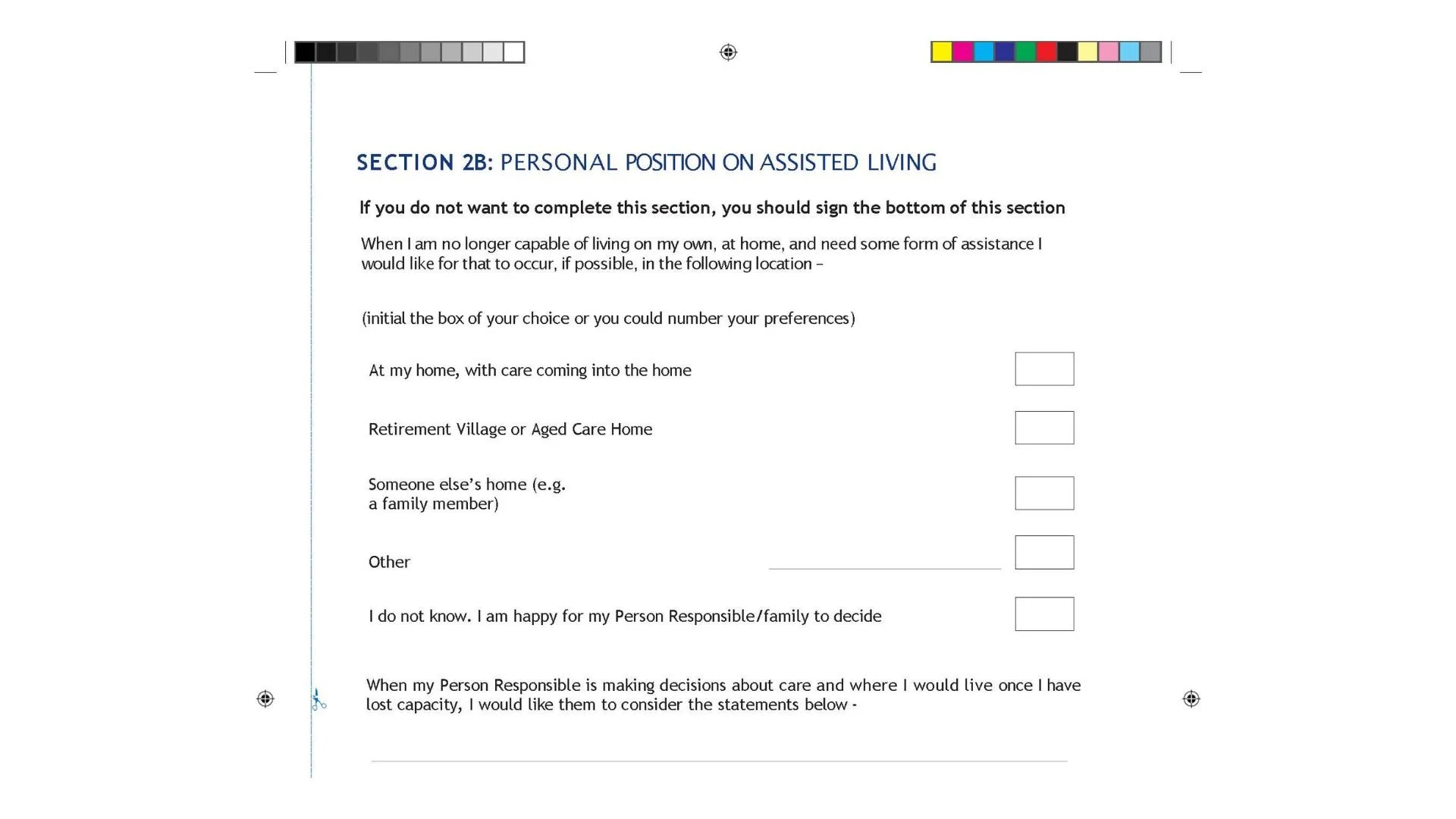
Not only will you be getting this form in PowerPoint form, but I have already included an extra page where your client sets out their thoughts about moving into Aged Care vs living at home with care coming into the home. Of course a more in depth statement would be more valuable, but sometimes you can only get the client to do so much.
Also sometimes finishing one thing, like this shorter document prepared by the government, is encouraging enough that they are willing to try a longer document (your Letter of Wishes) with more details about things like what if I am living with someone in a romantic relationship, and what if I have asked someone to move in with me and look after me?
What about the Power of Attorney?
If you are more interested in the Power of Attorney itself, then you could attend the event on Tuesday 2 June 2026 at 1pm AEST about the Initial Consultation, and how we get clients to properly engage with the Power of Attorney beyond simply telling you whose name to write next to “Attorney”. That event costs $100 per person to attend. You can find out more about that event by clicking on the button below.