In a recent Webinar about POAs I was asked what a person should do if they are drafting, or dealing with a Power of Attorney that is due to start now? Is there a clause to be included, or a procedure or step to be taken to protect against risk that is now? This was no doubt in response to my previous Webinar talking about future risks, which you can read more about here.
I am not a big believer in drafting generic clauses to insert into most or all of the POAs to avoid the risk, I think it has limited benefit. Some popular options include -
Nominating someone to get yearly reports - the bank will use this to refuse to acknowledge it (how do I know you have done that), the person who is nominated has no real ability to force the issue, and it feels a little like a DIY Will, all comfort but without a reason for the comfort
Drafting clauses with permission for specific assets - this can work if you get the client to give specific instructions, and if the client is willing to have regular updates as their physical or asset position changes (and if you have managed to get a client to do that please tell me how)
A clause that says that if you have any capacity at all you are to be consulted first before the Attorney does anything - the two choices here are that the asset holder ignores this clause, so that the clause has no effect, or that the asset holder sees this clause and requires you to be involved fully in the transaction, which might defeat the purpose of the POA
So what should we do?
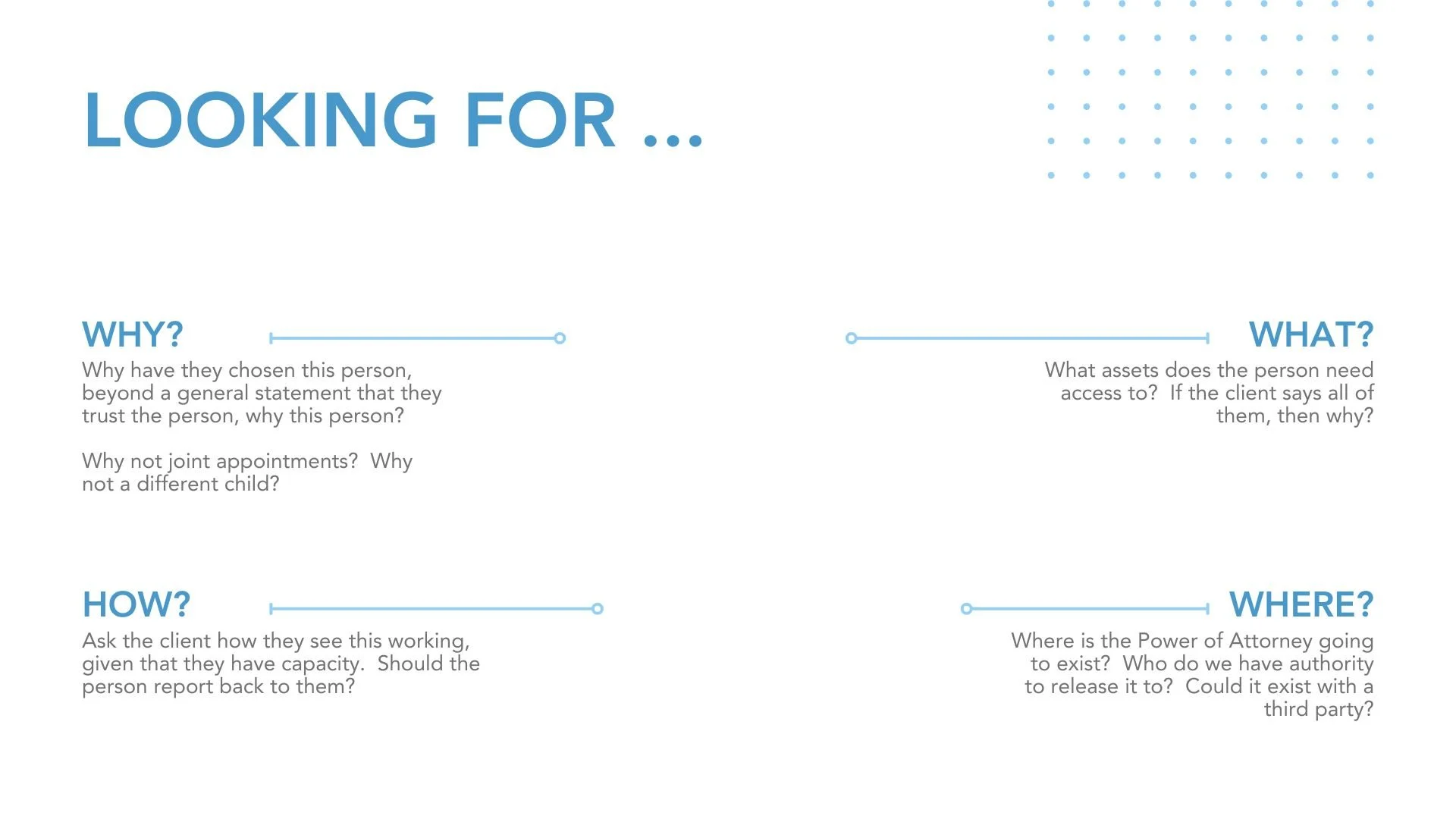
This doesn’t mean that I don’t think drafting can help, I absolutely think the solicitor can draft something to help. First and foremost, getting actual complete instructions from the client about their plans for aged care would be helpful. If they would do anything to avoid entering Aged Care then this might be worth reflecting in the POA or the Advance Care Directive, or both. I have seen some excellent clauses used to express that the Attorney is able to spend any money to facilitate the Appointor aging at home and avoiding Aged Care.
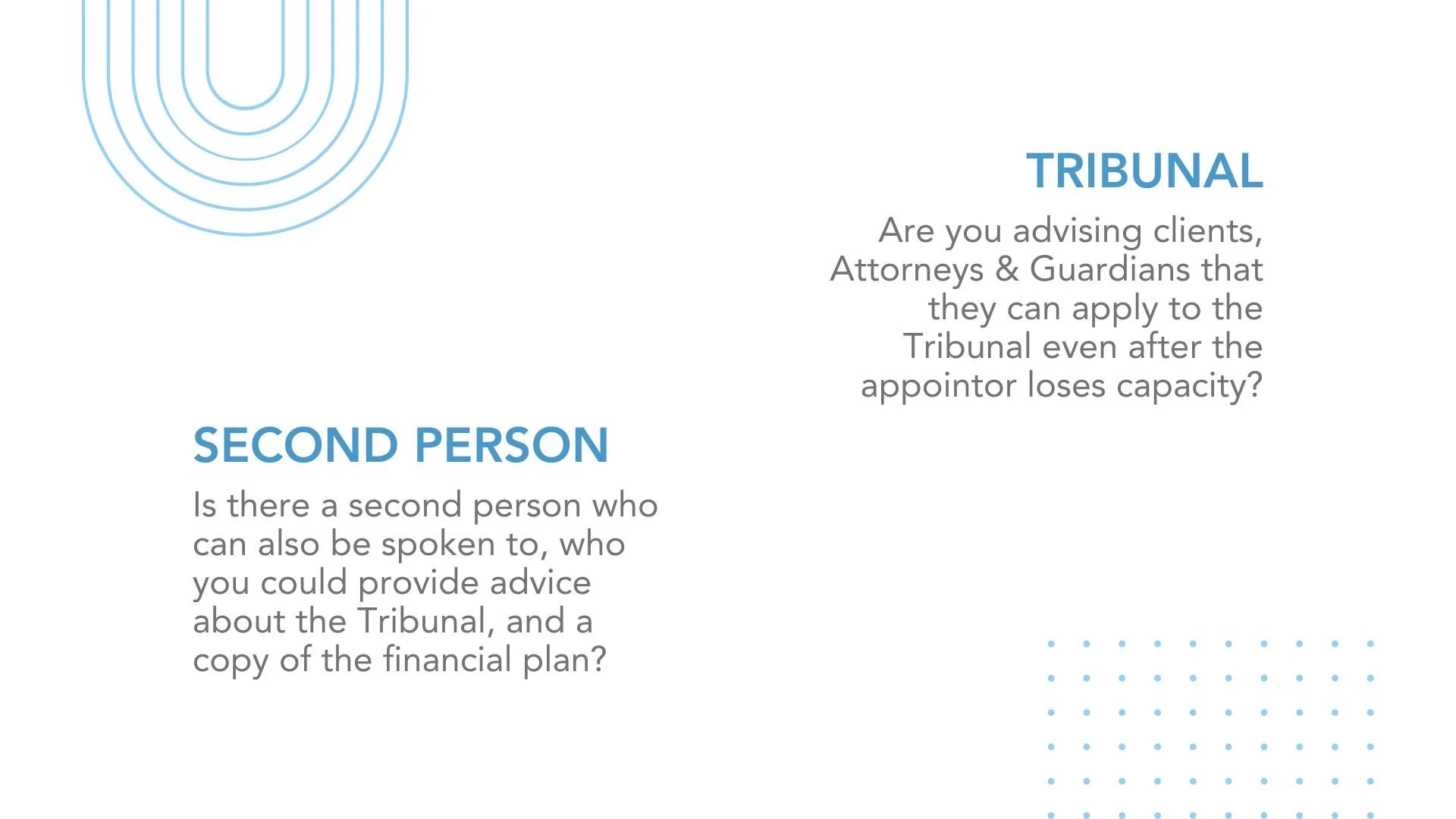
If they also have reduced to writing their preferences and wishes for funding retirement and aged care then a copy of this could be given to an observer, a person who is not an Attorney but who the lawyer has briefly advised about the existence of the Tribunal and the fact that the Appointor could commence proceedings even if capacity has been lost, but with a little help from the observer and also the assistance of a written plan that was completed when that person had capacity. Both of these issues are tricky as they require the client to engage, meaningfully not peripherally, with the concept of needing help later in life, and doing more than naming an Attorney now.
Let’s discuss it
This Webinar will be run on Friday 12 June 2026 at 1pm AEST, it will cost $100 per person. We will look at how we can cover POAs and risk in the Initial Consultation in a way that confirms that they need to do more than name an Attorney, but without scaring them away for three months due to the overwhelm that they are feeling.
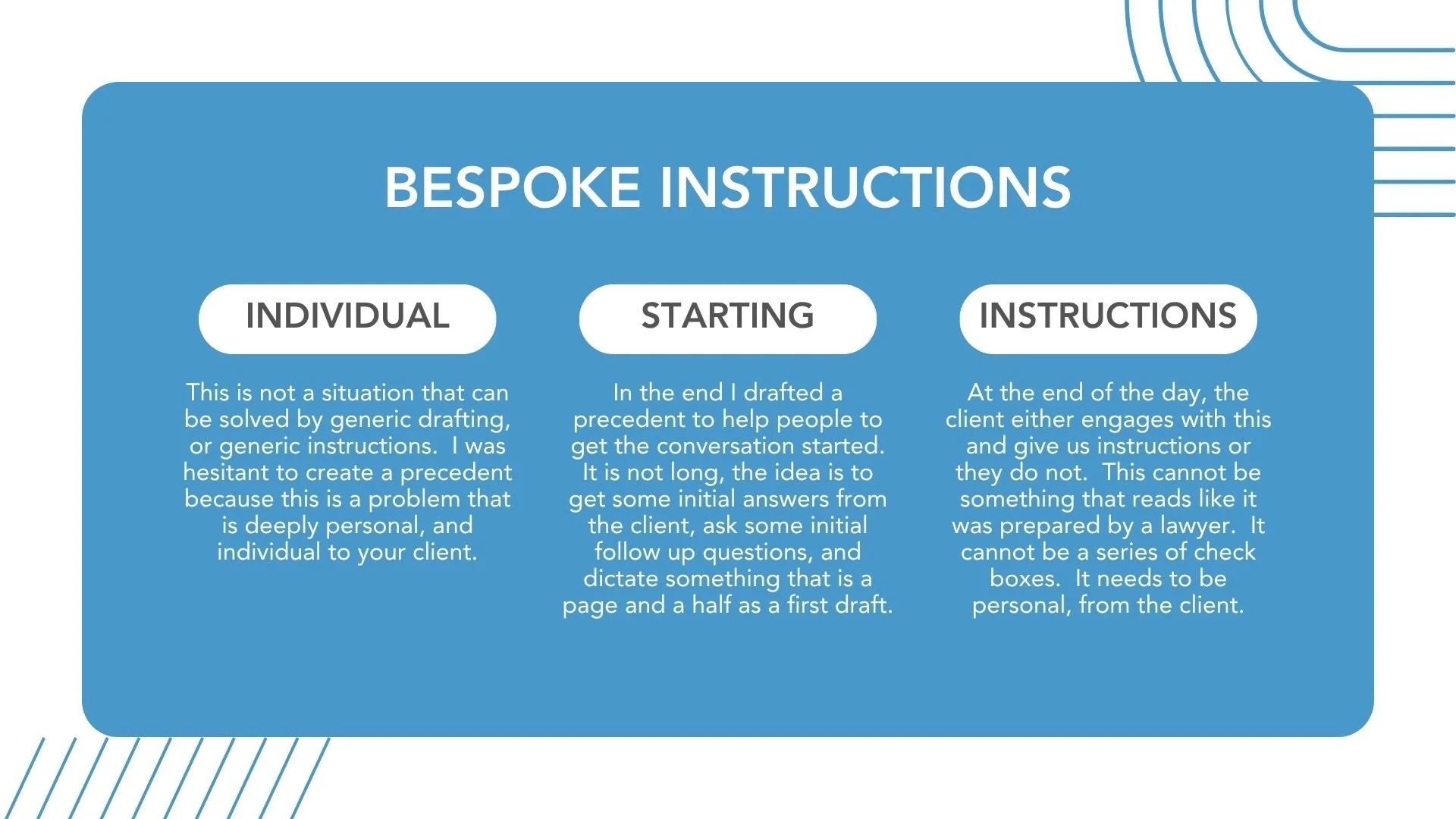
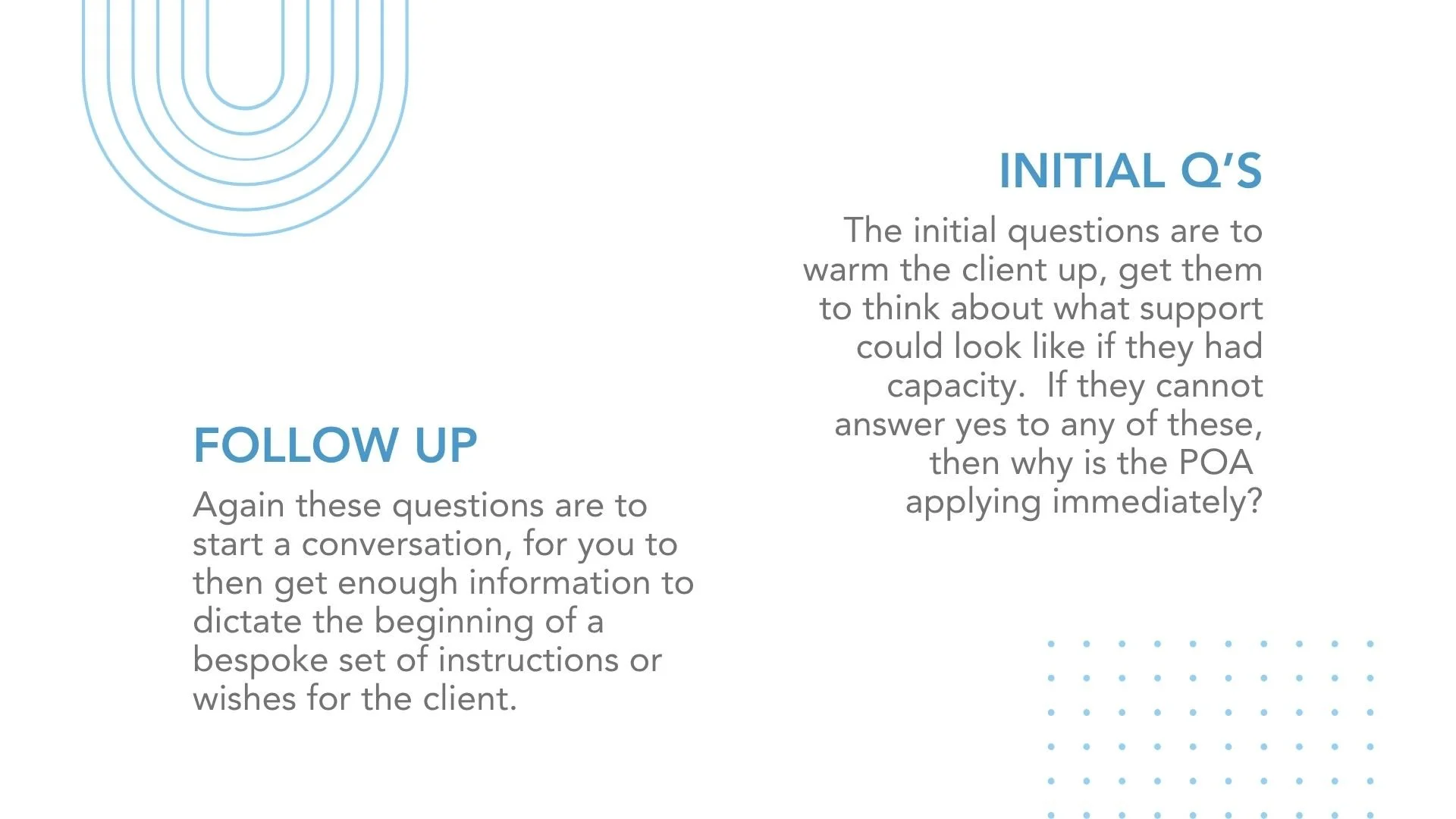
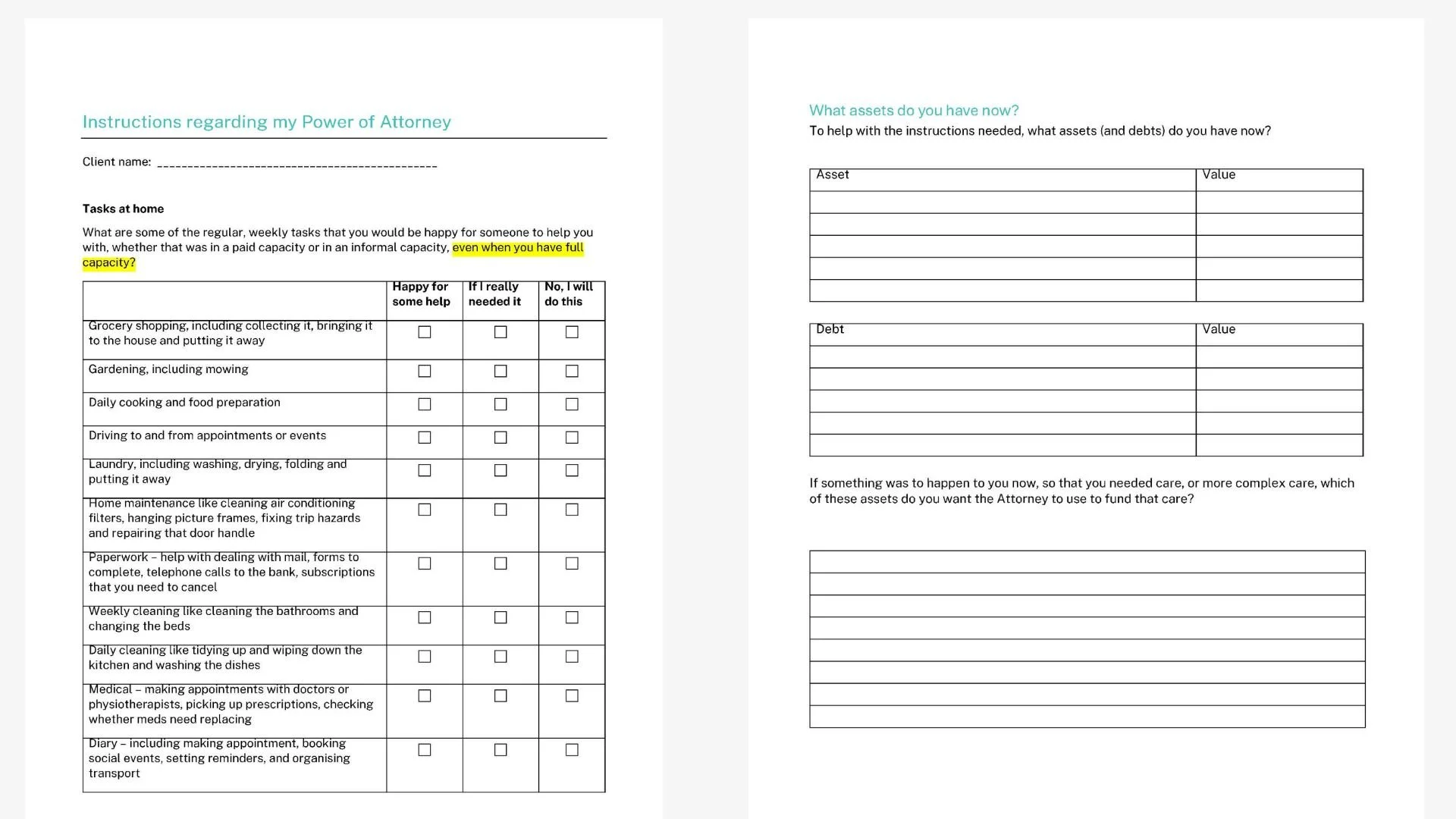
As we covered in the previous Webinar on POAs and Elder Abuse (which you can still get the past papers for here), the timing of the abuse, or the problem, will impact what the appropriate response is. If the abuse is a risk now can we help them with that? I think that we can, though it involves having more than a peripheral conversation about aging and medical needs. It also involves that thing that a lawyer hates, the bespoke document. While I have included in the documents for this Webinar a checklist for you to use to get these instructions it is not intended as a proforma precedent to give to the client, it is intended for the solicitor to use to start a conversation.
Most of our older clients would do anything to avoid moving into Aged Care or a Retirement Village. When we speak to them when they are in their 60s they are fine with the concept of a retirement village, but as the reality approaches they keep finding excuses to put it off. Some clients in their 70s or 80s admit that they are against the concept of retirement villages, but most deal with it by saying they don’t need it.
The reality is that regardless of the instructions that our clients gave us in their 60s, most of them don’t want to move into a retirement village when the time comes, and would happily decimate their financial position if it meant keeping them out of aged care. Yet most of the cases that I read when it comes to disputes about people who are still alive revolve around whether the Attorney is making financially responsible decisions, and whether the problem is the support person “not understanding” the severity of the medical needs of the person in need of care and protection. The support person could be doing exactly what they were told to do by this person before they lost capacity, doing everything humanly possible to keep this person out of aged care. It has become an argument about what the person wanted, and what everyone remembers the person saying about what they wanted.
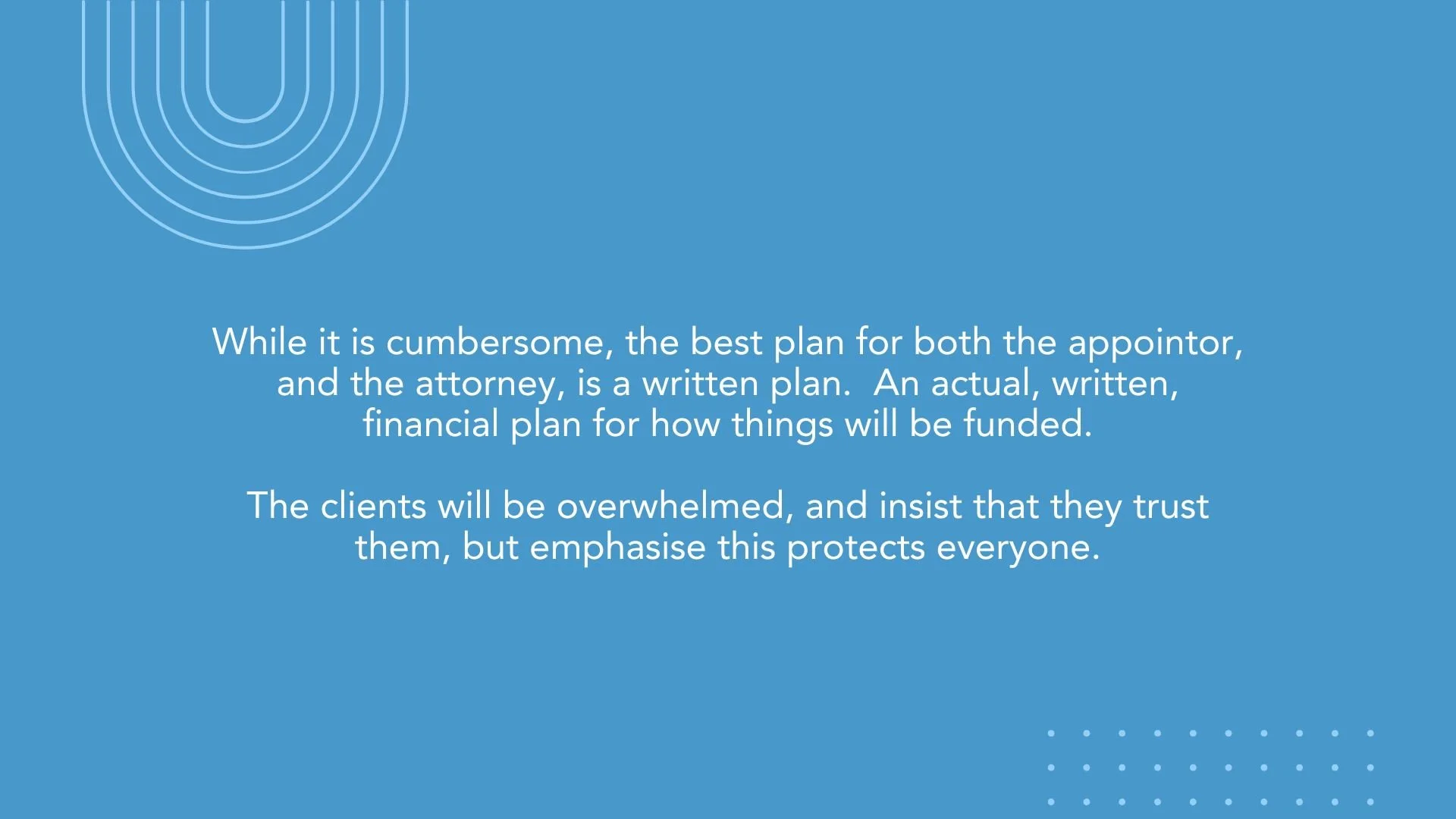
If the client writes down that they are happy with moving into Aged Care, and the Attorney is doing something else entirely, then we are actually discussing what the person wrote down they wanted, not debating whether the person said this or that. If the client writes down that they want to age at home, and that is what the Attorney is doing, we might save everyone some trouble. Regardless of the client’s preferences if it is written down, then if the third party has concerns they can take this written instruction to the appropriate Tribunal or Court. We are still skipping the stage of arguing about what the person wanted when they had capacity, and instead focused on whether what the Attorney is doing marries up with those wishes.
The CPD Event
This Webinar will run for an hour on Tuesday 2 June 2026 at 1pm AEST and hopefully we will have time to discuss some real life examples. Once you have registered you are welcome to put real life examples to me before the Webinar so that I can include them. It will cost $100 per person to attend, and we will work through a few different approaches to getting clients to take these decisions seriously.
In keeping with previous CPDs, you will get a $50 discount code if you email a requisition from the Supreme Court in relation to an Estate matter and provide enough information for the requisition to make sense. I will bundle them together and they will form part of the subject matter material available to participants. Email it to janis@janisconsults.com and then I will send you the discount code and a survey for you to complete with further questions. If you give me two requisitions you could attend for free.
If you have any questions then please reach out to me at janis@janisconsults.com
NSW Estate Lawyers Facebook Group
Did you know about the free Facebook Group? This is a group for NSW Estate Lawyers to discuss things that are particular to practising Estate law in this State. Here are some examples of things we might discuss -
(1) I have an overseas death certificate, it doesn’t fit the questions in the online system, has anyone else had this problem?
(2) Does anybody have better contact details for ABC bank?
(3) I have a Will where the parties divorced (so the Executor has since divorced the deceased), but the online system doesn’t seem to give me the option to respond with divorced (only deceased), what should I do?
Of course more recently there is a lot of discussion about pragmatic issues with the new online system. We might also share the occasional post that only other lawyers who practice in this area will appreciate. The idea is to help and support each other, and share information that is helpful.
If you would like to join you can just search for “NSW Estate Lawyers” in groups on Facebook, please make sure that you answer the questions.
