This event is occurring on Monday 17 August 2026 at 1pm AEST. We have previously run this topic, and so when you register you will immediately receive the past papers, and the recording from the previous run of this Webinar. You will also receive the Zoom link to attend the training live on Monday 17 August.
What is this webinar about?
While there is a lot of talk in legal circles about Powers of Attorney and the prevention of elder abuse, I feel most of the focus has been on drafting ever more complex clauses, or doing a better job of identifying abuse or risks that already exist.
I believe that the biggest risks with Powers of Attorney, and the most common abuse happens well after the client is sitting with the solicitor. How do we address this timing issue? What are the assumptions that clients bring to the document that make it hard for us to communicate this future risk? How do we help them to make better decisions now to protect themselves in the future?
In this Webinar we looked at what sort of client education we need to do to create a document that actually protects them, as well as the following topics -
What are the actual, common risks to people preparing these documents?
Which risks has the client already thought about, which ones do we need to educate them on?
What is our duty as solicitors to protect our clients from future elder abuse? How do we go about doing that?
Can adding a clause help? Can giving different advice help?
A review of some cases regarding elder abuse and challenges to the Power of Attorney
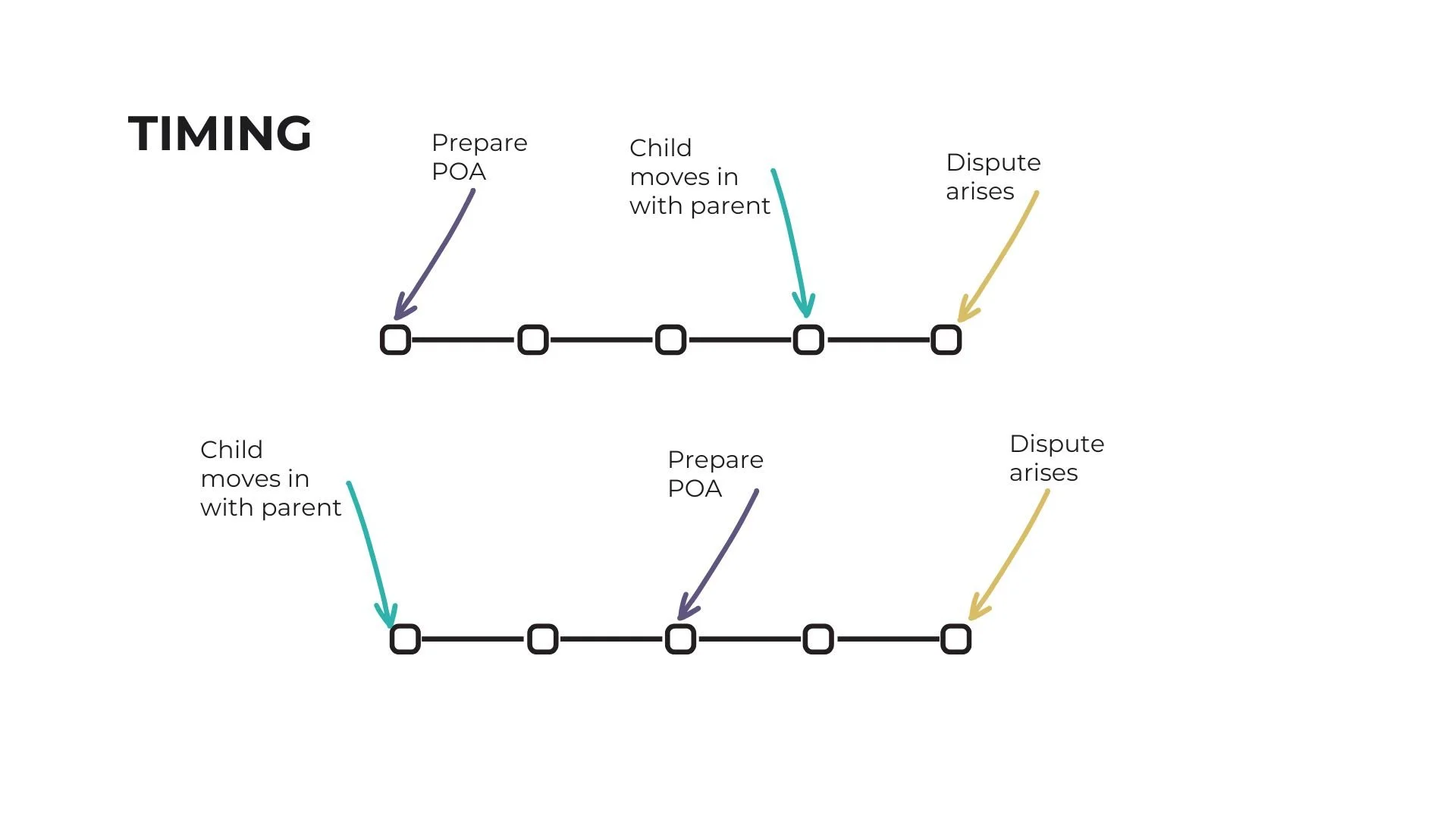
The timing of the abuse, or the problem, will impact what the appropriate response is. If you look at the above slide, if the child is already living with the parent then this is something that you can discuss at your initial consultation, and provide some advice or even draft some clauses to deal with. This is also something that the solicitor is probably already alert to, the risk of duress at the initial consultation. You can even structure your document and your appointment to try to avoid duress at this stage.
However, if the adult child does not move in with the parent until after preparation of the Power of Attorney, particularly in circumstances where the client insists that they won’t have a child come and live with them, then how can we protect a client from that risk. Can we protect a client from that risk? I think that we can, though it involves having more than a peripheral conversation about aging and medical needs.
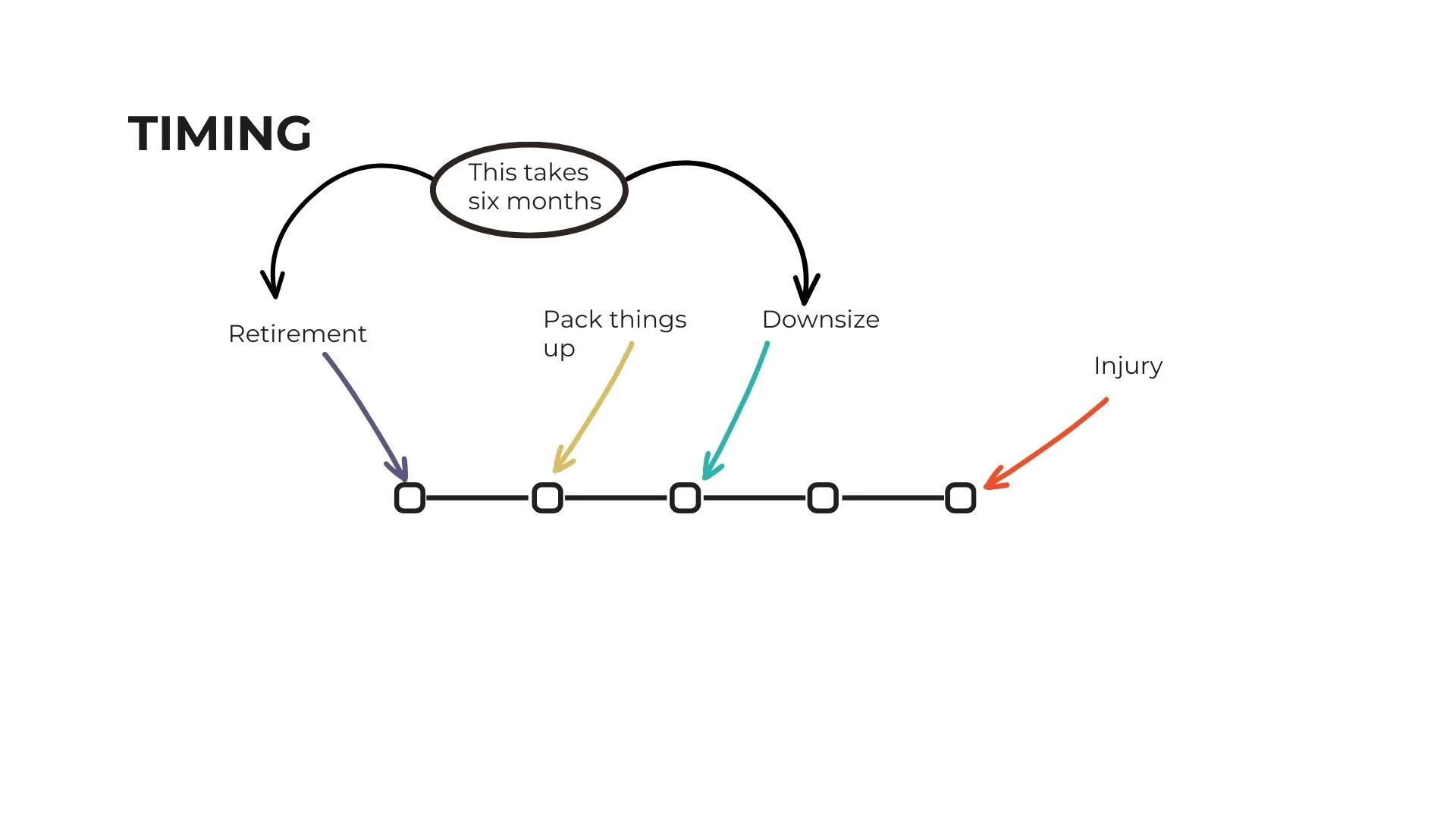
As lawyers we know that downsizing takes a considerable amount of time, and that the clients are inclined to put it off until “later”. You can read more of my thoughts on the timing issue here. This delay in downsizing until “later” causes trouble because the clients cannot predict when later will come.
The below situation causes friction, which does not benefit our clients. Moving early, downsizing or moving into an appropriate independent living situation take time. We know that the best thing for our clients is to seriously consider doing this early, earlier than they think they need to.
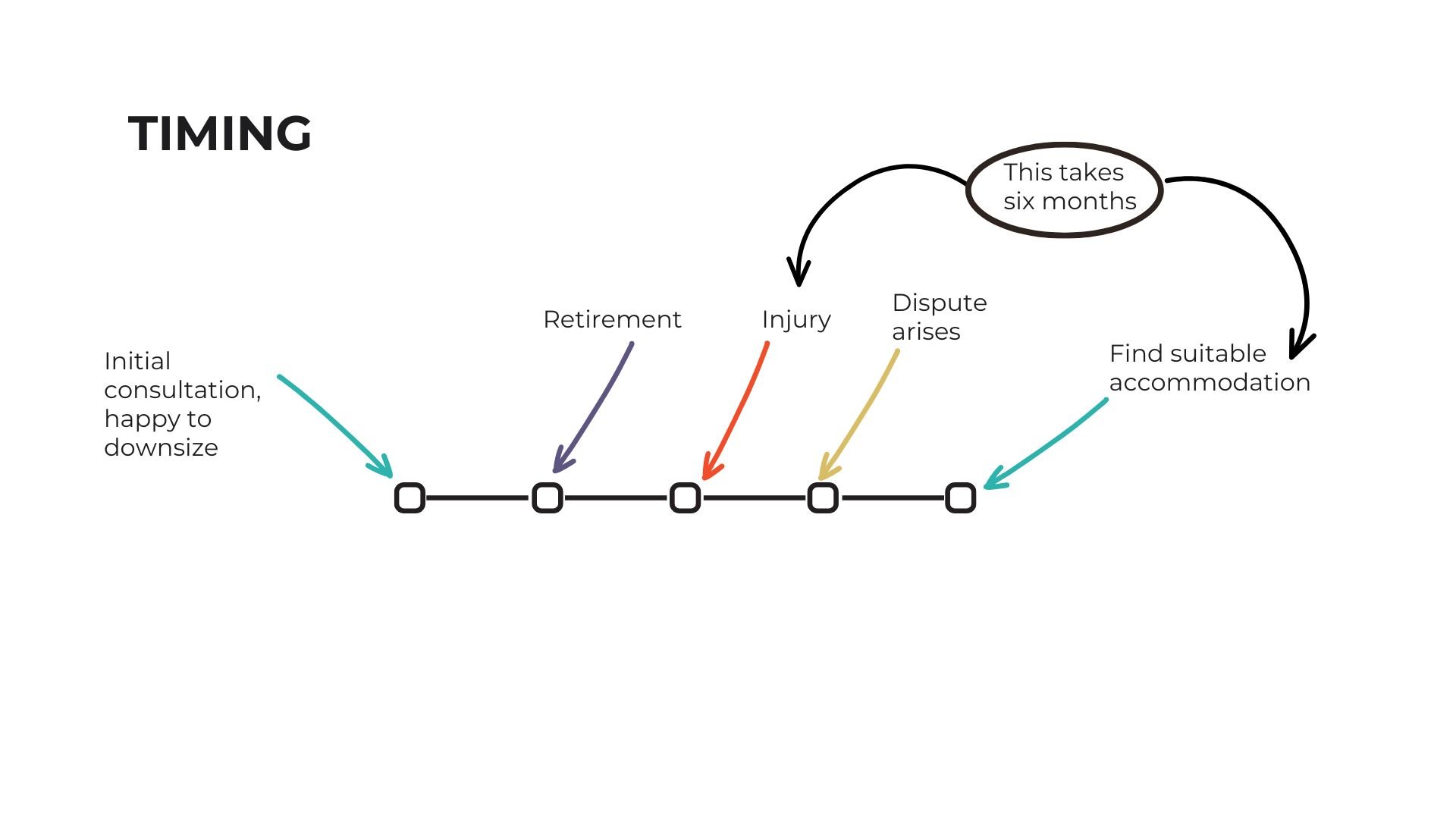
We also know that if we get them to write down their plans ahead of time it makes it easier to question the Attorney, if the Attorney is the source of the abuse. Why aren’t you doing this, is there a particular problem with this plan? Why are you moving them out of their downsized apartment, or appropriate low end care facility? Not only are the clients avoiding the problem by having downsized before the injury happened, but it also makes it harder for the abuser to justify large movement in assets if their needs are currently being met and everyone is currently following the written and agreed upon plan.
The CPD Event
This Webinar costs $100 per person to attend. You will get a recording of the live Webinar, along with a copy of the slides and some precedents including a covering letter to send to the client with the draft Power of Attorney, and a precedent letter to the client if you think a capacity check is necessary.
In keeping with previous CPDs, you will get a $50 discount code if you email a requisition from the Supreme Court in relation to an Estate matter and provide enough information for the requisition to make sense. I will bundle them together and they will form part of the subject matter material available to participants. Email it to janis@janisconsults.com and then I will send you the discount code and a survey for you to complete with further questions.
If you have any questions then please reach out to me at janis@janisconsults.com
NSW Estate Lawyers Facebook Group
Did you know about the free Facebook Group? This is a group for NSW Estate Lawyers to discuss things that are particular to practising in Estate Planning or Estates. Here are some of the topics that we discussed in June 2026 -
(1) Here is a link for the AML/CTF Implementation Guides from the Law Society, in case you missed it in the Monday Briefs.
(2) With NSW estate applications made by a de facto partner, what evidence needs to be filed?
(3) The executors appointed under the Will are not available and we have been instructed by a beneficiary to apply for administration, would this be an LOA with the Will annexed?
Of course more recently there is a lot of discussion about pragmatic issues with the new online system. We might also share the occasional post that only other lawyers who practice in this area will appreciate. The idea is to help and support each other, and share information that is helpful.
If you would like to join you can just search for “NSW Estate Lawyers” in groups on Facebook, please make sure that you answer the questions.