The problem
We tend to give couples a fairly heavy discount over, say, two single clients. In my experience we are usually charging about 20% or 25% more for couples instead of single clients. So for example, $900 for a single client package and $1,200 for a couple for a simple package.
I think this started on the basis that all couples wanted mirror wills, so you are just swapping names around, but now it is more that our clients expect it. I have been thinking a lot about where the issues come from in Estate Planning, particularly “simple” or basic Estate Planning, and whether most of our problems and risks crop up with couple clients.
THE difficulties for an estate planning lawyer
As lawyers we know that Estate Planning can be a costly area of law, mostly for reasons that are beyond our control. Some of these costly issues that are shared with me, from members of the NSW Estate Lawyers group, or in surveys that I run after CPDs, include -
The clients say it is simple, the clients think it is simple, it is not simple
The clients keep changing their mind, so you keep re-drafting
The clients get overwhelmed and disappear, the delays are significant
People with complex situations (like blended families) want simple solutions
The clients have unrealistic expectations - they think it should all be much cheaper, or they think their requests are simple but they are quite complex, they won’t take advise about complex things like life estates they simply insist it is simple and you are making it complex
The other most common complaint is sales, as in, I don’t have enough work. These issues are taken from surveys that have been completed by people who have attended my CPDs, but also sound familiar as someone who has done this type of work for many years.
Many of the problems above sound similar, essentially, the clients don’t understand how complicated the situation is and they won’t listen to advise on that topic. I think even the delays are caused by this issue, they came ready to do a very basic think about this, they came away overwhelmed because they thought it would all be quite simple.
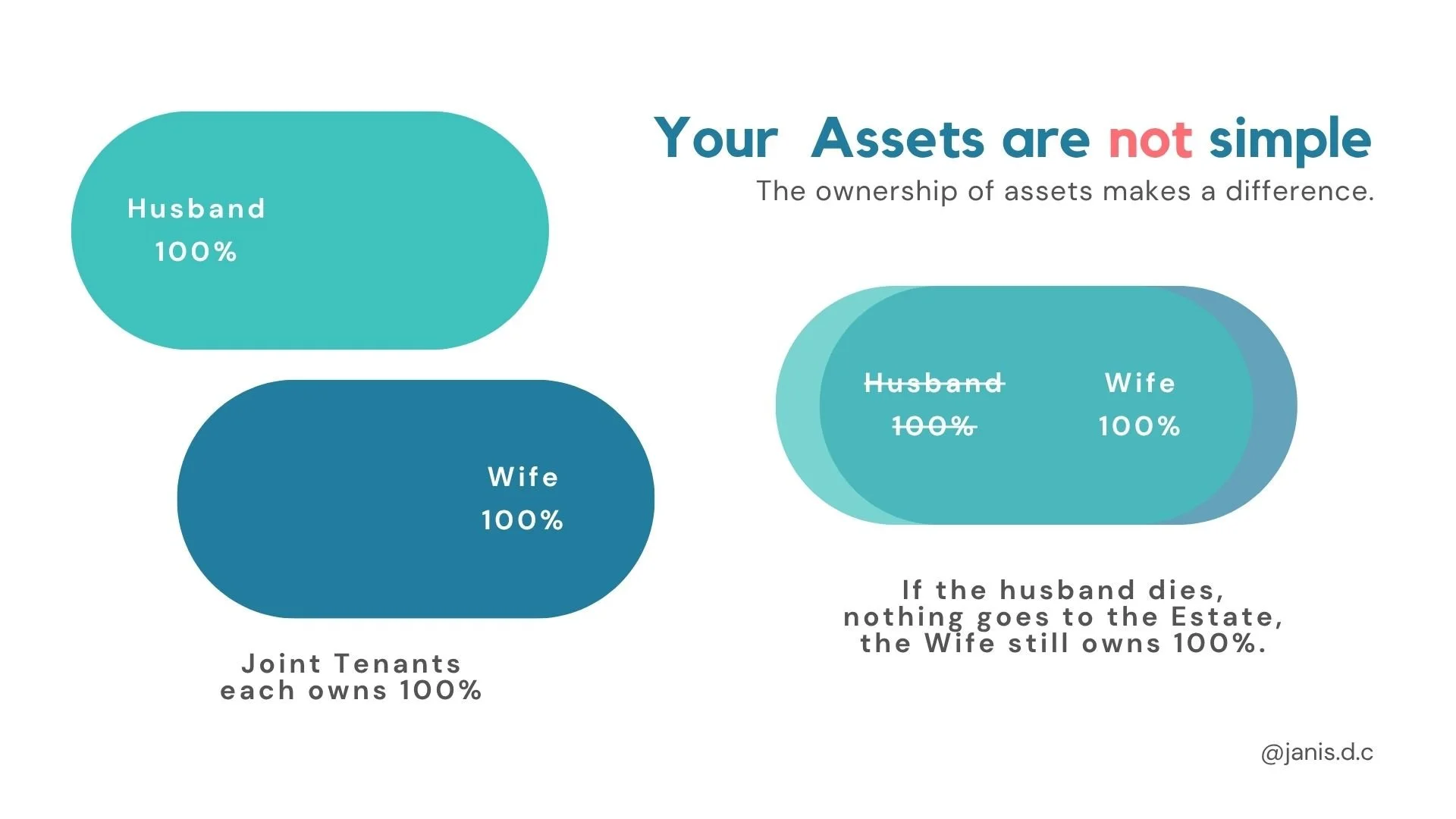
My assets are simple
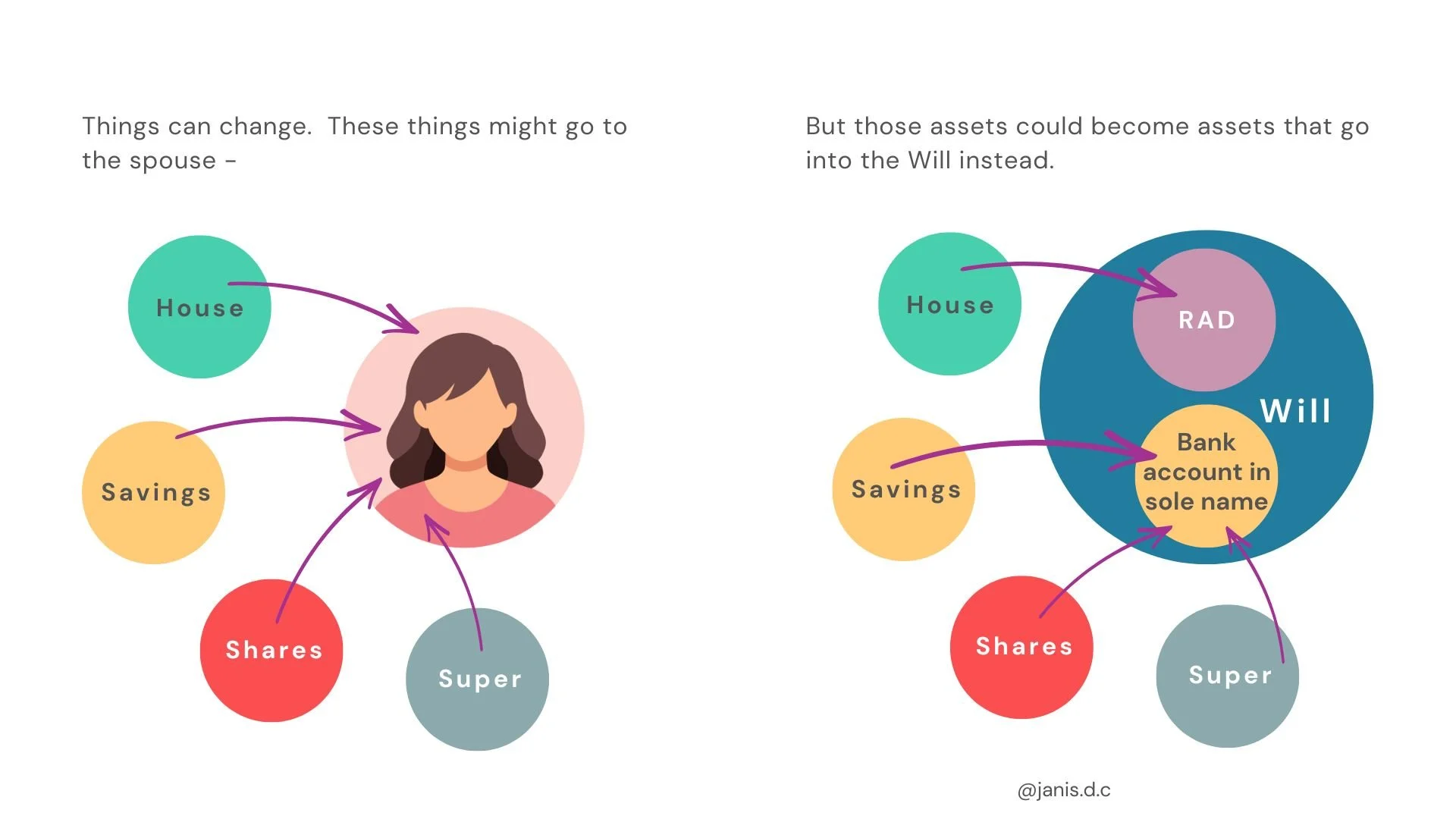
The thing is, many of the problems raised above are mostly a problem for couples, or are more complex for couples. For instance, the common refrain “my assets are simple” is almost never the case for couples. They will almost always have assets that are owned as joint tenants, even if they don’t own real estate jointly, even if they are in a blended family situation. There will be other assets, like superannuation, that are far more likely to flow to the spouse unless specific steps are taken now and into the future. The clients may make decisions in the future that change the nature of the assets without considering how this impacts their estate plan, like cashing out their superannuation into a bank account when they had intended for that superannuation to go to the spouse.
Assets can be complex for a single person, but the accidental complexity is mostly a problem for couples. Getting the clients away from the “my assets are simple” mindset is harder because couples then think “oh but my spouse will do the right thing”.
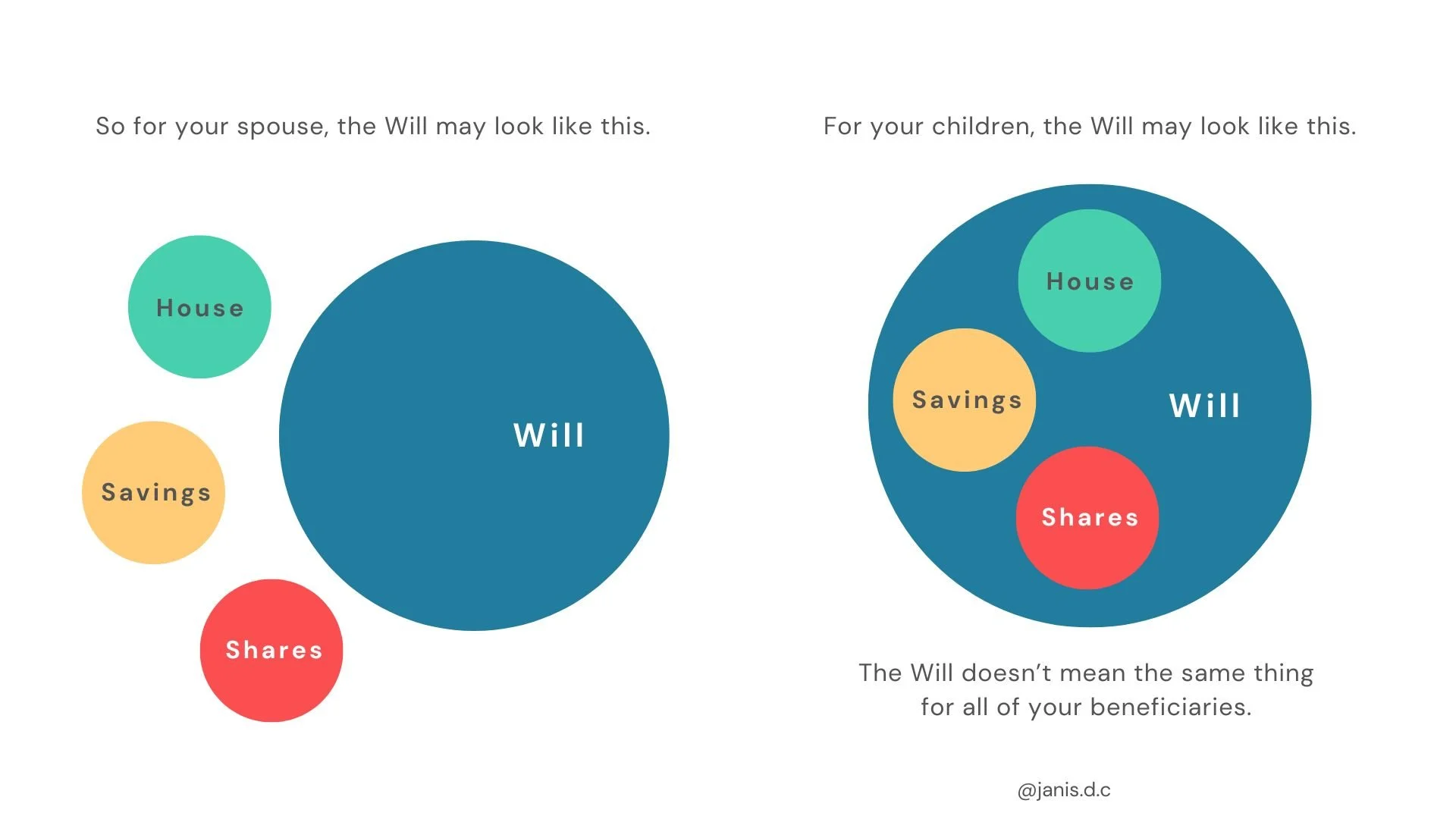
The problem highlighted in the above image mostly doesn't exist for single people. Additionally we know that things can change, assets can change as people get older. So assets that primarily used to go to the spouse now go to the Estate. With the exception of, perhaps, superannuation this doesn’t really happen with single people because they probably don’t have any assets passing by survivorship. When you combine this with the tendency of clients to treat everything like it is “simple” you have a lot more education that you need to do for the couple to get them to understand the actual impact of their Estate Plan.
Other issues
There are other issues that are mostly exclusive to couples, such as -
most of the typical complications in Wills are caused by romantic relationships e.g. blended family situations which come with requests for things like life estates
if a conflict arises in the middle of the matter you might not be able to act for either of them
due to the nature of joint instructions there is an increased opportunity for the abuser to influence the instructions that the client gives to you
while an adult child can be the perpetrator of abuse or duress, the adult child can always be asked to sit outside and I struggle to think of a reason why you would be taking joint instructions from an adult child and their parent
getting active instructions from both can be difficult, making complying with our professional duties difficult but also causing other issues like misspelling his sister’s name, and then you are doing more work on the file six months later to fix that
there is an inherent conflict between the spouse and any dependent minor children, made more complicated by the presumption that this isn’t an issue - if the client was long term single they are more likely to accept a conflict between a partner and their child
Queensland has a presumption about attorneys exercising undue influence for a reason (s87(a) of the Power of Attorney Act 1998) and while another person could be exercising undue influence, you would hopefully not put yourself in a situation where you are taking instructions jointly from two people who are not married
the clients quite possibly won’t give a copy of their documents to anyone because clients are very private, increasing the likelihood that you are storing documents after the clients have died, single people understand the need to make sure someone independent knows what to do and who to contact even if they value privacy
married people are far more likely to think, my spouse will handle that, I don’t need to worry about that, my spouse will do the right thing, rather than actually think through some decisions now to make the situation more efficient or more effective
There is also the risk
All of these issues are mostly specific to couples, so why are we effectively charging single people more for their documents? Single people might also presume that their situation is simple but they don’t have these other issues baked in.
You also need to think about this from a risk perspective, it isn’t just about the time that you spend drafting and re-drafting in a fixed price environment, it is also about your overall level of risk. Single clients would be mostly a lower risk group, there are fewer potential triggers, and your risk is also a cost. Are you properly pricing your risk?
Your price communicates something
Lastly there is the issue that your price communicates something. Your price says something about your ideal client, your price points people towards certain packages, and at the moment you are pointing towards a preference for couple clients. As an example, if you stopped having couple packages at all, the couples would be furious about the “double cost” but what would that say to the single people? I am not saying that you should do this, I am saying, what does your hefty discount to couples say to your potential single clients?
Pricing can be a kindness, particularly if it is on your website. Mostly your pricing communicates who your offer is for. I talk about this in one of my CPD’s on Powers of Attorney and three tiered pricing but in short, your price and the comparison between your pricing communicates to your clients more than the amount of money that they need.
If you are given couples a hefty discount, and any of your marketing has a couples prejudice, your single adults are probably assuming this is not the offering for them.
Your price generates work
Remember earlier when I talked about the most common problems that people are reporting in my surveys? I mentioned having enough work. Do you know any firm that is intentionally aiming for work from single adults? Why not? They are lower risk, they are probably going to communicate clearly with friends and family about who they did their Will with to make sure it gets found, and they are probably only looking for a lawyer if they have already accepted that everything is not simple. You could finish everything more quickly with a single client.
You don’t have to exclude couples, but is your pricing and your marketing including singles?
Are you separately time recording for singles and couples with your Estate Planning? I know that not all legal software providers allow you to set your own matter types but if they do, you should really have more than one matter type when it comes to Estate Planning. The first split that you should make is the difference between couples packages and singles packages.
Ask yourself whether you are honestly charging the right price for a couple, or are you offering couples a discount? Maybe that is intentional, maybe that is part of your marketing plan, but it should be an intentional choice not an accidental one.
Three tiered pricing
Three tiered pricing can be a really effective strategy for focusing your client’s attention where you want it. I am going to be talking about that in the upcoming Webinar on making the Power of Attorney the center of your marketing, and using three tiered pricing to give an entry point to the “simple” matters that more naturally points the clients towards the importance of a proper Estate Plan. You can find out more about that here.
I am also working on a set of precedents dealing with a three tiered pricing system, including costs disclosure and easy to use checklists. If you want to find out more about those as they are developed, and get a discounted offer when they are ready, then you could join the waiting list.