This free Webinar has already happened but you can still get the recording and the documents, and do the learning online at your own pace. We looked at Advance Care Directives, what is required, who are the various decision makers in NSW (including responsible person and also registered supporter) and should we be using ACDs more often? You will get an Advance Care Directive in PowerPoint form as your own precedent so that you can make any amendments you think will help it to fit in with your practice.
Because the Webinar is free, as part of registering you will be asked to complete a survey of roughly ten questions. The questions are relevant to the Webinar, and the answers will be shared when we run this Webinar again, live, in a couple of months.
why are we talking about this?
Getting clients to prepare a comprehensive Power of Attorney, Appointment of Enduring Guardian and Letter of Wishes in relation to retirement and aged care is hard. It is hard because their plan, before they came into your office, was to die with their full emotional, mental and physical capacity. As lawyers we are raising a topic they haven’t truly engaged with, and therefore we are raising the fears that they haven’t really confronted.
Offering them the Advance Care Directive can give them the confidence to make a comprehensive plan if there is a sticking point, such as being “forced” into aged care, that is stopping them from engaging with the process. It also allows them to take a small step, and feel accomplished, which might help them with how overwhelming a comprehensive Estate Plan can feel.
Additionally as the lawyer you are getting the security of a medical capacity assessment. Doctors and GPs are familiar with this document, as it is created by the NSW Government, and are comfortable discussing them with clients and signing them. The documents that lawyers offer up are met with suspicion, the client is referred away, and there is often a significant cost for your client. This Advance Care Directive achieves a very similar goal without the barriers.
If you would like to receive the recording, and the papers, please click on the Register button.
what does this have to do with powers of attorney?
Most arguments around Powers of Attorney are routed in the care of the older person, where they should live, how their needs should be funded, and what should happen next. We are making the mistake as lawyers of partnering the Advance Care Directive with the Appointment of Enduring Guardian document, but in reality it is the medical decisions that are causing arguments under the Power of Attorney.
Making decisions around loss of capacity and changing capacity is an emotional time for human beings, and human beings who are emotional are routinely poor at communicating well or making rational choices. The more information that you can have your client commit to writing and, in this case, witnessed by a trusted doctor, the more arguments you might avoid down the track.
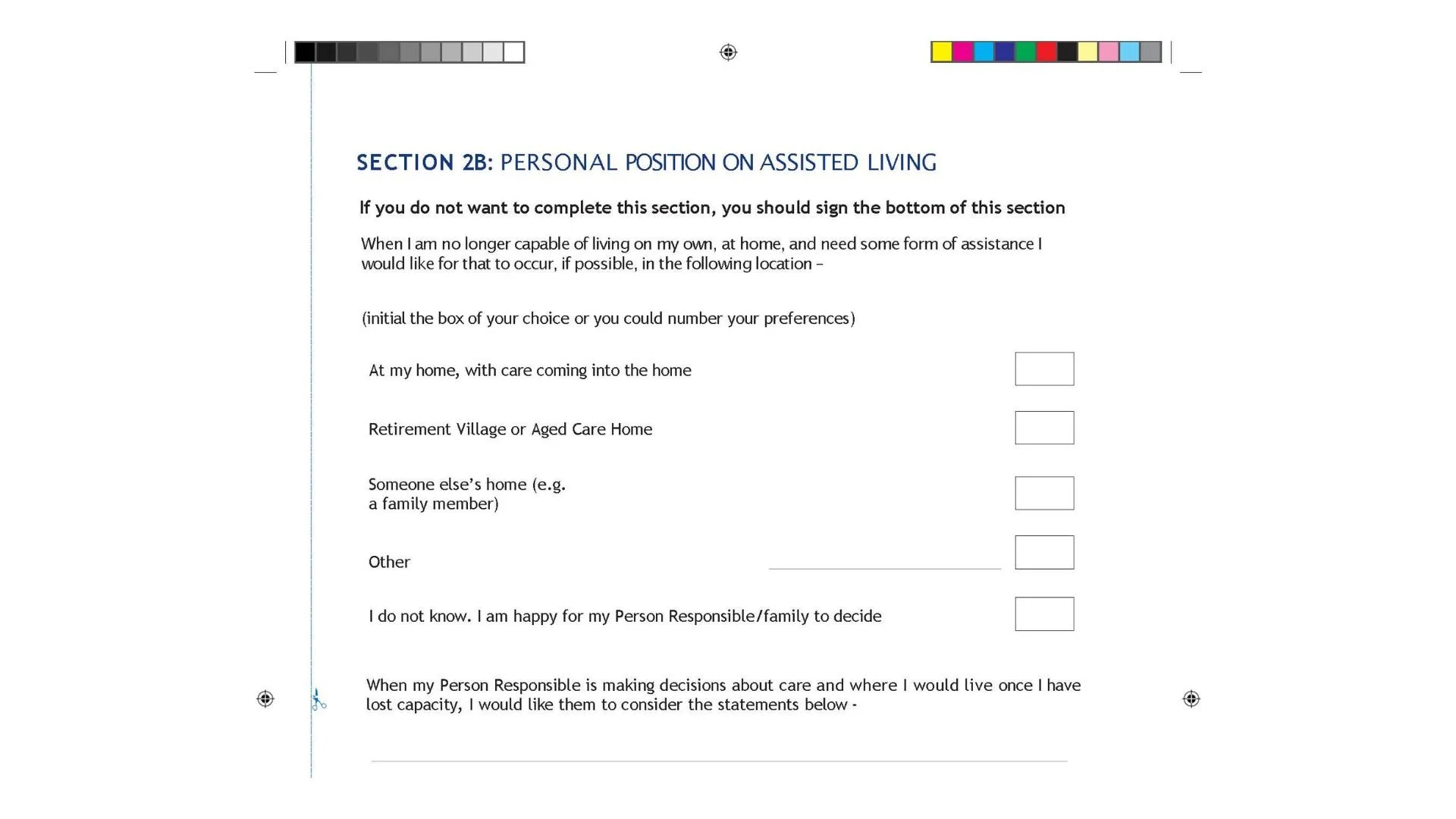
Not only will you be getting this form in PowerPoint form, but I have already included an extra page where your client sets out their thoughts about moving into Aged Care vs living at home with care coming into the home. Of course a more in depth statement would be more valuable, but sometimes you can only get the client to do so much.
Also sometimes finishing one thing, like this shorter document prepared by the government, is encouraging enough that they are willing to try a longer document (your Letter of Wishes) with more details about things like what if I am living with someone in a romantic relationship, and what if I have asked someone to move in with me and look after me?